CJC‑1295 sits at the intersection of peptide chemistry and endocrine pharmacology, making it a focal point for researchers investigating growth hormone (GH) regulation, receptor signaling, and translational pharmacokinetics. As a synthetic growth hormone–releasing hormone (GHRH) analog, it is widely evaluated for its capacity to modulate the GH/IGF‑1 axis in tightly controlled laboratory settings. With expanding interest from UK universities, biotech programs, and contract research groups, understanding how CJC‑1295 works, how its variants differ, and how to safeguard data integrity through rigorous quality control is essential for robust, reproducible science.
What is CJC‑1295? Mechanism, Variants, and Study Design Implications
CJC‑1295 is a peptide analog of GHRH designed to engage the GHRH receptor (GHRH‑R) on pituitary somatotrophs, thereby potentiating endogenous pulsatile GH release under appropriate physiological contexts. Upon receptor binding, canonical signaling involves Gs protein activation, adenylate cyclase stimulation, cAMP generation, and downstream PKA/CREB pathways that facilitate GH synthesis and secretion. In many research models, this upstream activation is studied in relation to feedback across the GH/IGF‑1 axis, including hepatic IGF‑1 production and subsequent modulation of GH secretion via somatostatinergic and GHRHergic tone. Such studies often examine both acute pharmacodynamic signaling and longer‑range endocrine feedback loops.
The compound is frequently discussed in two formats: a “DAC” (Drug Affinity Complex) version and a short‑acting variant commonly referenced in literature as a modified GRF fragment. The DAC moiety is engineered to increase peptide persistence via albumin binding, extending apparent systemic exposure and altering pharmacokinetics. This prolonged interaction can change the temporal profile of GH pulses researchers observe, which in turn affects the selection of sampling windows, assay sensitivity requirements, and model time horizons. By contrast, short‑acting constructs tend to support investigations that focus on acute or pulsatile dynamics, enabling higher temporal resolution for GH secretory bursts and receptor desensitization inquiries.
Study design considerations flow directly from these pharmacological distinctions. For example, in preclinical models, the DAC variant’s extended half‑life may simplify PK/PD correlation across multi‑day windows but can complicate interpretation when the research question hinges on discrete GH pulse characterization. Conversely, short‑acting analogs can be advantageous when quantifying rapid changes in downstream markers such as STAT5 phosphorylation, IGF‑1 transcriptional responses, or cAMP signaling kinetics. Researchers also weigh receptor occupancy, potential tachyphylaxis, and assay cross‑reactivity: ELISAs for GH and IGF‑1, ligand binding assays for GHRH‑R engagement, and LC‑MS/MS for peptide quantitation are all commonly employed to map exposure–response relationships. Against this backdrop, selecting a format of cjc 1295 aligned to the question at hand—acute pulsatility versus extended exposure—can materially influence data interpretability.
Quality, Purity, and Handling: Building Reliable Data with Research‑Grade CJC‑1295
Reproducible outcomes begin with verifiable research‑grade quality. For peptide work, that typically means batch‑level documentation and orthogonal testing. HPLC purity (≥99% where feasible) helps minimize confounding by process‑related impurities, while mass spectrometry or sequencing confirms identity. Additional “full spectrum” tests—such as heavy metals and endotoxin assessments—are especially relevant when CJC‑1295 is used in sensitive cell systems or in vivo preclinical settings conducted under appropriate institutional approvals. A robust Certificate of Analysis that details these parameters is more than a formality: it underpins the chain of custody and safeguards analytical conclusions.
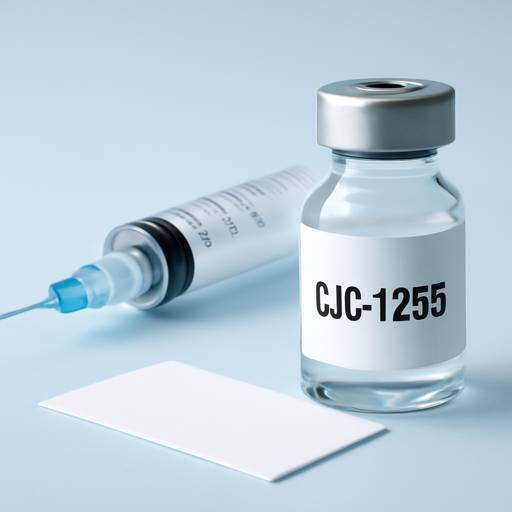
Storage and logistics are equally consequential. Lyophilized peptides benefit from controlled temperature conditions and protection from moisture and light to mitigate hydrolysis, oxidation, and aggregation. Temperature‑monitored cold chain storage reduces excursions that can degrade peptide integrity before it even reaches the bench. For UK research teams working to tight project milestones, next‑day tracked dispatch and transparent shipping conditions can be invaluable in preserving lot quality. Once received, best practice in the lab typically includes minimizing freeze‑thaw cycles by preparing small aliquots and adhering to validated reconstitution protocols suited to the experimental context. The objective is simple: keep the peptide as close as possible to its characterized state at the time of testing.
Another element of reliability is batch consistency. When research spans longitudinal cohorts, multi‑site collaborations, or comparative pharmacology, maintaining the same lot—or rigorously bridging between lots—reduces variability. Documenting supplier, batch numbers, and COAs within electronic lab notebooks supports traceability during peer review or internal audits. Finally, compliance matters. Reputable UK suppliers will clearly label peptides as Research Use Only, explicitly stating “not for human or veterinary use,” and will refrain from offering injectable formats. Such guardrails protect researchers, institutions, and datasets alike by ensuring materials are used only within appropriate scientific frameworks and regulatory boundaries.
Applications and Examples in UK Research Settings: Endocrine Pathways, Pharmacology, and Analytical Methods
Because CJC‑1295 targets the GHRH receptor, it features prominently in projects mapping endocrine circuitry, receptor pharmacology, and PK/PD integration. In endocrine pathway modeling, investigators may examine how modulated GHRH‑R signaling shapes the amplitude and frequency of GH pulses and how those changes propagate to IGF‑1 production and feedback control. Pharmacology groups sometimes position CJC‑1295 as a reference ligand when characterizing novel GHRH‑R modulators, leveraging it as a benchmark for potency, efficacy, and signaling bias across cAMP accumulation assays or β‑arrestin recruitment readouts. In systems biology contexts, it can serve as a tool compound for disentangling somatotropic axis crosstalk with metabolic pathways, including lipolytic and gluconeogenic processes studied in vitro.
Analytically, GH and IGF‑1 are often quantified via ELISA or chemiluminescent assays, supported by time‑stamped sampling to resolve pulsatility. For peptide exposure, LC‑MS/MS enables precise quantitation and stability assessment, while receptor occupancy and kinetic binding studies can employ radioligand displacement or surface plasmon resonance where available. Downstream signaling is frequently profiled with Western blot or phospho‑specific assays targeting JAK2/STAT5, CREB, or ERK, depending on the cell model. Advanced designs incorporate population PK/PD modeling to relate concentration–time curves of CJC‑1295 variants to endocrine responses, thereby informing dose interval hypotheses for preclinical systems without implying any clinical application.
Consider a practical UK scenario: a university lab in Manchester evaluates the DAC‑modified variant against a short‑acting analog in a controlled preclinical model approved by relevant ethics committees. Sampling schedules are tuned to the differing pharmacokinetics—denser time points in the first hours for the short‑acting analog, broader windows across days for the DAC format. Parallel analyses include cAMP readouts in pituitary‑derived cell lines and IGF‑1 quantitation in serum, supported by LC‑MS/MS stability checks to confirm peptide integrity across the study. Another example involves a London biotech screening GHRH‑R agonists; here, CJC‑1295 functions as a positive control to validate assay responsiveness across batches, safeguarding against drift and enabling cross‑study comparability.
In both cases, data reliability hinges on materials that match their documentation, shipped under conditions that protect the peptide’s profile, and deployed within a framework that is strictly non‑clinical. UK‑based research teams often prioritize local, documented supply to reduce lead times and temperature risk, while insisting on HPLC‑verified purity, identity confirmation, and contaminant screening. By aligning experimental aims—acute pulsatility versus extended exposure—with the appropriate CJC‑1295 format, and by instituting rigorous quality controls from procurement to analysis, laboratories can generate high‑fidelity datasets that withstand scrutiny and accelerate insight into the GHRH–GH–IGF‑1 axis.

Ankara robotics engineer who migrated to Berlin for synth festivals. Yusuf blogs on autonomous drones, Anatolian rock history, and the future of urban gardening. He practices breakdance footwork as micro-exercise between coding sprints.